Discover the Versatility of a Fillet Knife: Important Device for Every Culinary Fanatic
The fillet blade is frequently ignored in the kitchen area. Its slim blade enables accuracy in different cooking tasks past fish filleting. From cutting fowl to preparing vegetables and fruits, its versatility is amazing. Understanding its makeup and utilizes can significantly influence cooking methods. Yet, many home cooks ignore the value of choosing the right blade. What aspects should one consider when picking a fillet knife?
Understanding the Makeup of a Fillet Knife
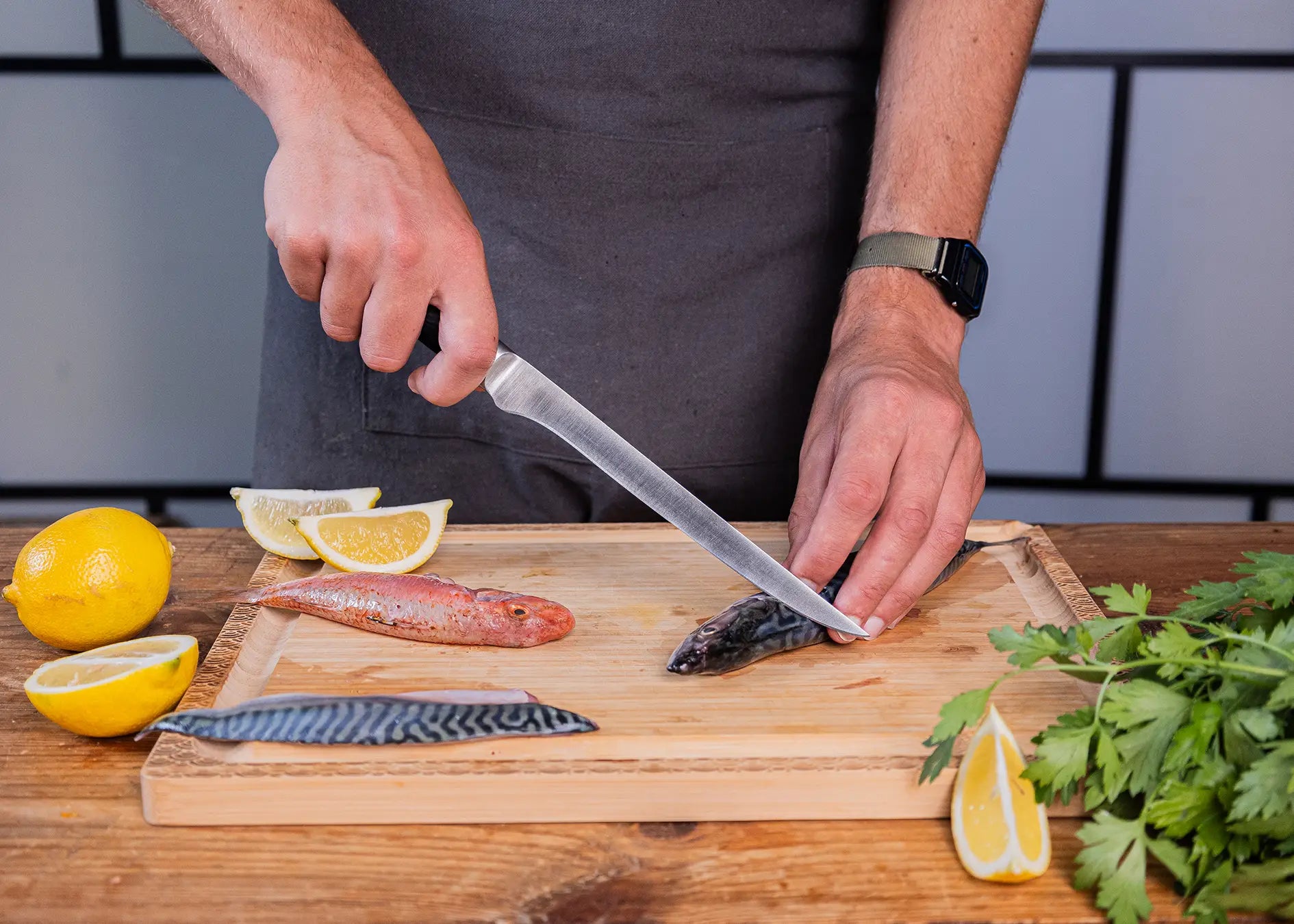
A fillet knife is a specific tool designed for precision and control in the cooking arts. Its composition contains a number of key parts that add to its efficiency. The blade is commonly long, slender, and versatile, enabling easy navigating around bones and fragile flesh. This adaptability is vital for filleting fish, as it enables the user to make tidy, exact cuts without tearing the meat.
The side of a fillet blade is usually lancinating, commonly including a straight or slightly curved layout to help with smooth cutting. The manage is ergonomically designed for a safe grip, providing convenience during prolonged usage. Materials such as stainless-steel are commonly chosen for the blade as a result of their resistance to corrosion and simplicity of upkeep. Overall, understanding the makeup of a fillet knife is vital for cooking fanatics that look for to boost their abilities and achieve excellent lead to their food preparation endeavors.
The Numerous Uses a Fillet Knife in the Kitchen area
Various cooking applications highlight the convenience of a fillet knife in the cooking area. Mainly created for filleting fish, its sharp, adaptable blade permits accurate cuts along the bones, generating tidy, fragile slices. Beyond seafood, a fillet blade masters cutting and deboning chicken, making it an invaluable tool for preparing poultry and turkey meals.
Furthermore, its slim design help in preparing veggies and fruits, using control for detailed jobs such as peeling or segmenting citrus. The blade's skill is additionally useful for slicing through treated meats and cheeses, making sure also sections for charcuterie boards.

Exactly how to Select the Right Fillet Blade for Your Demands
Picking the ideal fillet blade is crucial for maximizing its possibility in the kitchen area. When choosing a fillet knife, a number of elements need to be taken into consideration. The blade length is essential; commonly, fillet blades vary from 6 to 9 inches. Much shorter blades supply accuracy for smaller fish, while longer blades supply adaptability for bigger catches.
Next, the blade product plays a substantial function. High-carbon stainless-steel is favored for its sharpness and deterioration resistance, while adaptable blades allow for much better ability to move during filleting. The handle's product and design should also be evaluated for convenience and grip, as a safe and secure hold is vital during use.

Tips for Keeping Your Fillet Blade
Keeping a fillet knife is vital for ensuring its durability and performance. Routine cleaning is vital; after each usage, the blade must be washed with cozy, soapy water and dried promptly to stop corrosion. Keeping the blade correctly is equally vital; using a protective sheath or magnetic strip can protect against blade damages and maintain the edge sharp.
Honing the blade regularly will improve cutting effectiveness. A sharpening rod or whetstone can be used to preserve the side, assuring smooth and accurate cuts. Furthermore, staying clear of contact with tough surface areas, such as glass or ceramic, helps stop dulling.
Examining the deal with for any kind of indications of wear or damage is essential, as a safe and secure hold is important for safety and security and control. By following these upkeep suggestions, cooking enthusiasts can guarantee their fillet knife stays a reliable and reputable device in the kitchen.
Fillet Blade Techniques for Perfect Cuts
Recognizing blade angles is essential for achieving exact cuts with a fillet knife. Strategies for skinning fish further enhance the capability of cooking fanatics, permitting cleaner and extra reliable preparation. Mastery of these methods not only enhances presentation however additionally boosts the total cooking experience.
Mastering Blade Angles
While understanding the art of filleting fish, among the most crucial aspects to contemplate is the blade angle, which substantially affects the accuracy and my explanation quality of each cut. A sharp fillet knife typically calls for an angle between 15 to 30 levels for suitable efficiency. This angle permits smooth, regulated slices without tearing the flesh.
Newbies might prefer a steeper angle for even more control, while skilled cooks may decide for a shallower angle to accomplish finer cuts (best fillet knife for saltwater fish). Readjusting the angle according to the kind of fish being prepared is also essential; stronger fish may need a various technique than delicate ranges. Comprehending these subtleties allows cooking enthusiasts to enhance their filleting abilities significantly
Methods for Skinning Fish
Understanding the techniques for skinning fish is important for culinary lovers looking for to boost their filleting skills. The process begins by putting the fish on a secure surface area, guaranteeing it is secure. A sharp fillet knife is essential; the blade must be flexible to browse the contours of the fish. Beginning at the tail, the blade should be placed in between the skin and flesh, keeping a shallow angle to stay clear of cutting with the skin. Gentle, consistent strokes enable tidy splitting up, while the non-dominant hand holds the skin taut. For tougher skins, such as salmon, making use of a sawing movement can enhance control. With technique, these techniques result in perfectly skinned fish, prepared for cooking productions.
Comparing Fillet Knives: Material and Layout
When picking a fillet blade, the choice of product and design plays an essential duty in performance and customer experience. Generally, fillet blades are crafted from stainless-steel or high-carbon steel. Stainless steel uses deterioration resistance and needs less upkeep, making it appropriate for newbies. On the other hand, high-carbon click for more info steel offers exceptional sharpness and edge retention however demands extra care to prevent rusting.
The style of a fillet knife is just as crucial. Knives with an adaptable blade enable much better ability to move around bones and skin, enhancing accuracy. Blade size can differ, with shorter blades providing control for smaller sized fish and longer blades fit for larger types. Deals with likewise differ, with ergonomic designs supplying comfort and a secure grasp throughout long term use. Eventually, the appropriate mix of material and style can greatly boost a culinary enthusiast's filleting experience.
Recipes to Try Using a Fillet Knife
Many scrumptious dishes can be boosted by the precision of a fillet blade, allowing cooking enthusiasts to boost their food preparation methods. One popular recipe is pan-seared salmon, where the fillet blade helps with the skinning and portioning of the fish, ensuring also cooking. For sushi fans, the blade's sharpness is excellent for cutting fresh fish into delicate sashimi or assembling rolls with precision-cut active ingredients.
Frequently Asked Concerns
Can I Make Use Of a Fillet Knife for Meat Cutting?
Yes, a fillet blade can be utilized for meat cutting, as its adaptable blade enables for specific cuts. It is largely created for fish, so a committed meat knife may yield far better outcomes.
Exactly how Do I Develop a Fillet Knife Correctly?
To develop a fillet blade effectively, one need to make use of a whetstone at a 15-20 level angle, keeping consistent strokes. Additionally, a sharpening pole can be used for light touch-ups to maintain the blade's side.
What Is the most effective Size for a Fillet Knife?
The most effective size for a fillet blade generally varies from 6 to 9 inches. This size balances manage and adaptability, enabling accuracy when filleting fish or other fragile proteins efficiently and effectively.
Are Fillet Knives Safe for Beginners?
If used with care and proper technique, Fillet knives can be risk-free for newbies. Their style calls for careful handling, and beginners ought to exercise reducing skills and guarantee sufficient guidance to stay clear of crashes while discovering.
Just how Typically Should I Replace My Fillet Blade?
A fillet blade must be replaced when it shows substantial wear, such as dullness or damage. Usually, with routine use, enthusiasts could consider replacing it each to 3 years, depending on upkeep and usage frequency.
The blade size is important; usually, fillet knives vary try these out from 6 to 9 inches. Recognizing blade angles is vital for accomplishing exact cuts with a fillet blade. A sharp fillet blade is crucial; the blade should be versatile to navigate the shapes of the fish. One prominent dish is pan-seared salmon, where the fillet knife promotes the skinning and portioning of the fish, guaranteeing also cooking. Yes, a fillet knife can be made use of for meat cutting, as its flexible blade allows for specific cuts.